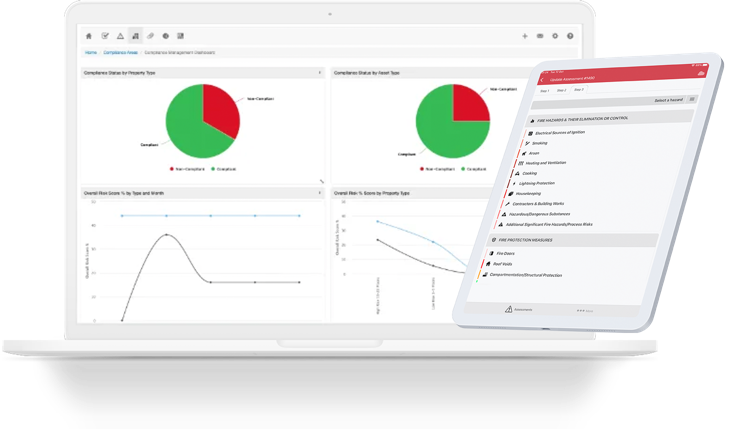
Fire Compartmentation Surveys
Intrusive and non-intrusive surveys with risk-scored findings and structured remediation control.
Evidence-based verification of passive fire protection integrity, governed within the Compliance Operating System.
Why Fire Compartmentation Matters
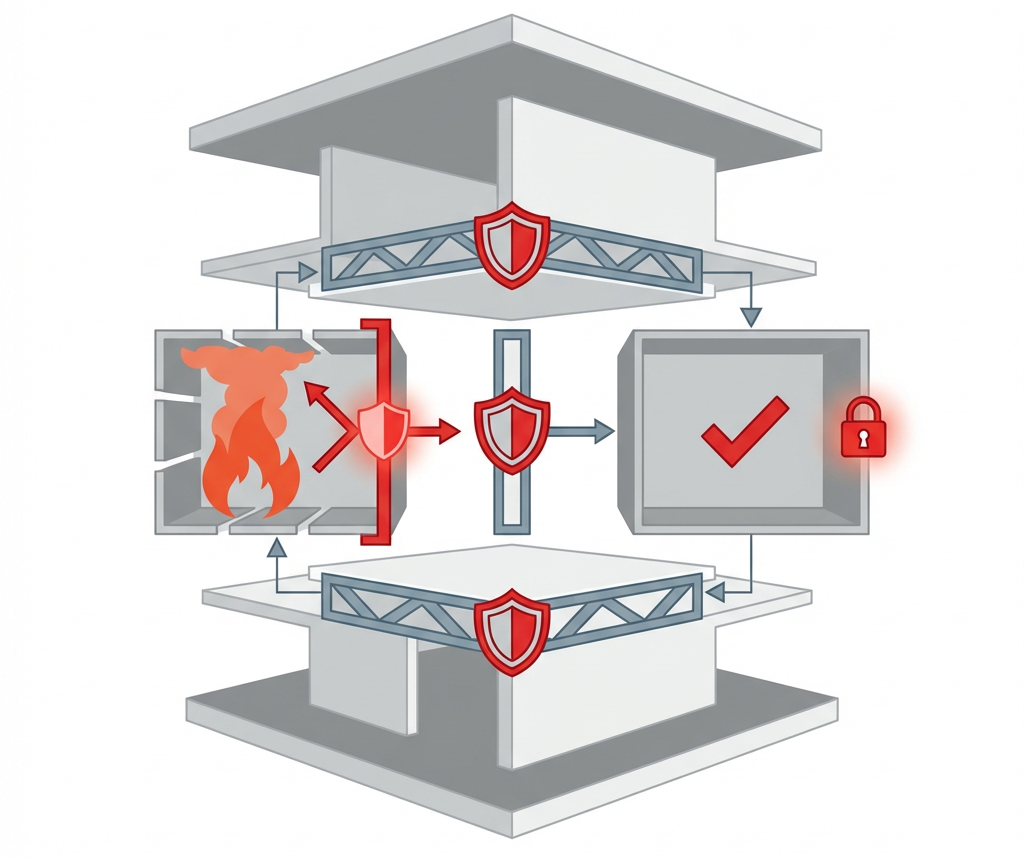
Fire compartmentation forms the foundation of a building’s containment strategy. Walls, floors, service penetrations and structural elements are designed to prevent the uncontrolled spread of fire and smoke.
Undetected breaches, particularly within risers, voids or service penetrations, can compromise life safety strategy and undermine fire design intent.
Compartmentation surveys provide structured verification of passive fire protection integrity and support compliance expectations under fire safety legislation and the Building Safety Act.
Structured Survey Methodology
Surveys are conducted by competent specialists using defined methodologies appropriate to the building type and scope.
Depending on requirements, surveys may include:
- Visual inspection of compartment lines
- Intrusive inspection of voids and service risers
- Review of penetration sealing and fire stopping
- Photographic evidence of findings
- Location mapping to floor plans
- Clear prioritisation of remedial actions
- Consistent reporting standards across properties
- Two-stage technical and quality assurance review
Survey scope is agreed prior to mobilisation and delivered within a structured governance framework to ensure clarity of findings and defensible documentation.

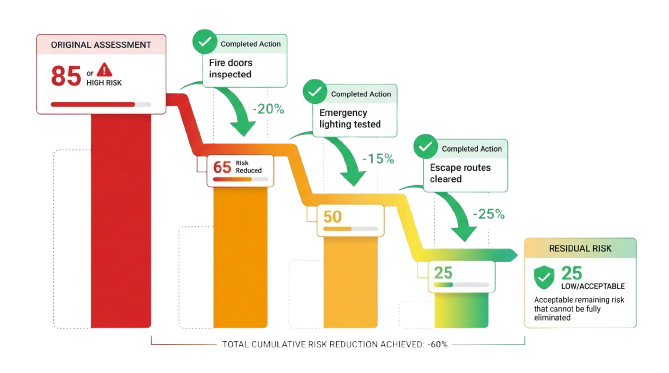
Risk-Scored Findings & Assessor-Defined Reduction Live Risk Scoring
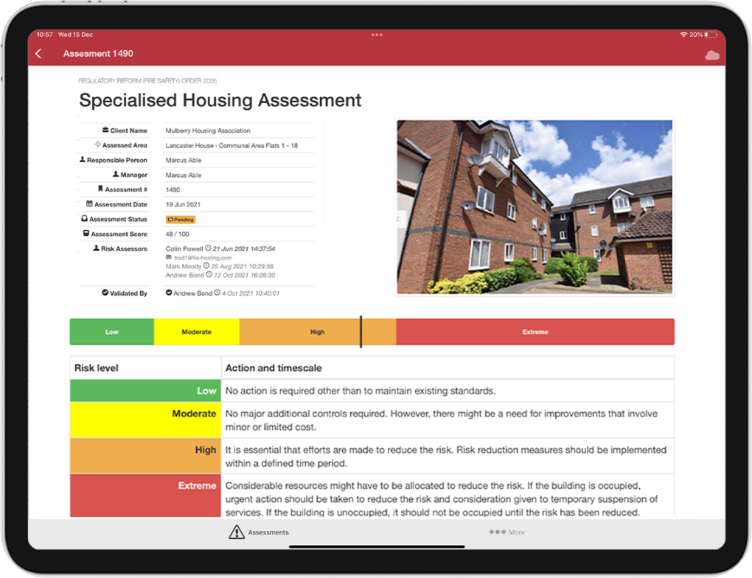
Identified deficiencies are structured within a defined and consistent risk framework.
Each hazard is:
- Scored using likelihood and consequence criteria
- Mapped through an established risk matrix
- Assigned action priority based on urgency
Where remedial actions are defined, the assessor determines the percentage risk reduction expected once works are completed. When actions are closed and validated, the system recalculates the reduced risk score while retaining the original score for audit purposes.
This ensures remediation impact is transparent, structured and professionally defined.
Floor Plan Mapping
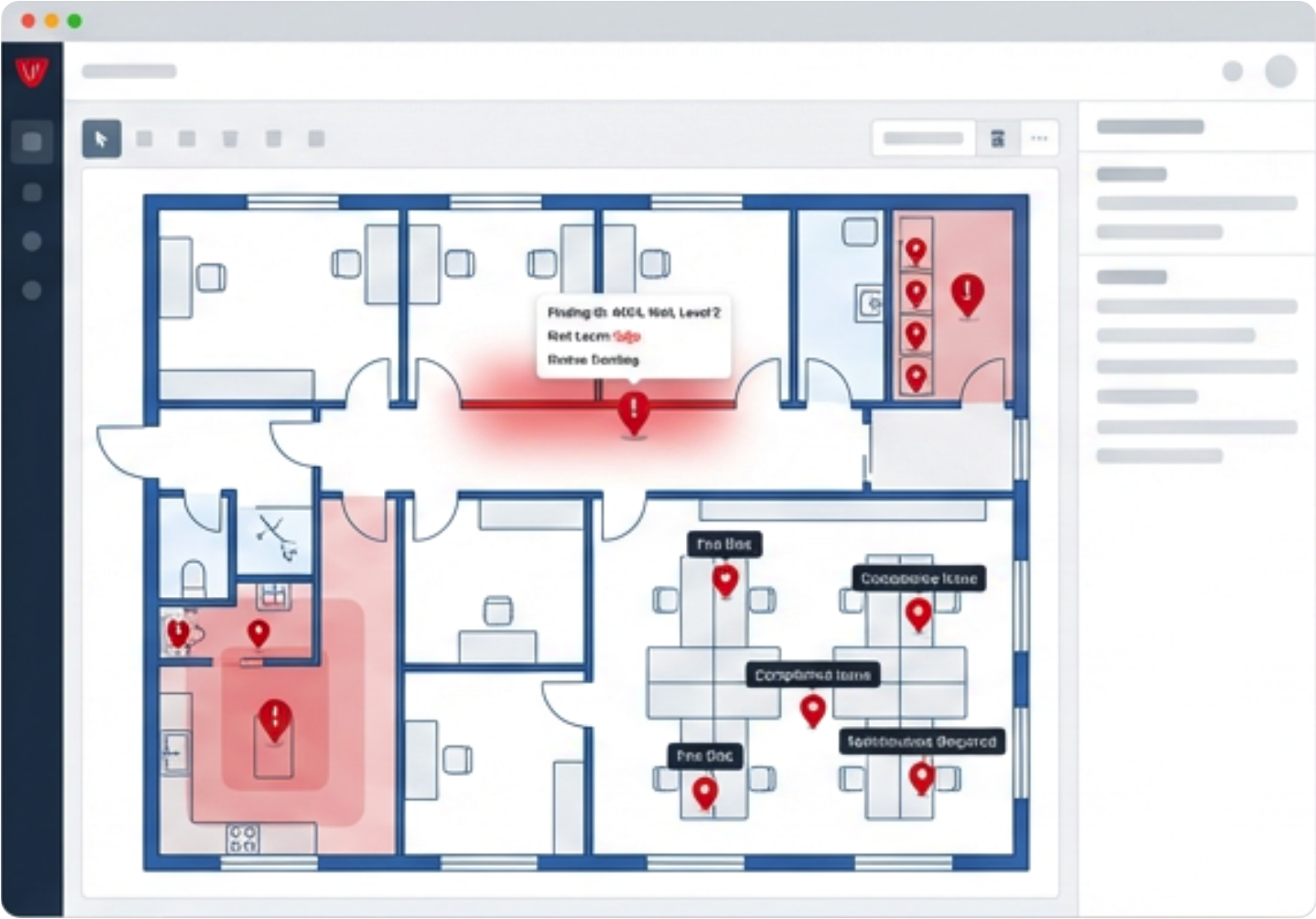
Findings can be mapped directly onto digital floor plans, identifying specific walls, risers, voids or service zones affected.
This enables:
- Clear spatial visibility of deficiencies
- Improved contractor coordination
- Efficient planning of remedial works
- Simplified communication with stakeholders
Location-based mapping is particularly valuable in complex or multi-storey properties.
Structured Remediation & Contractor Reporting
All compartmentation surveys include structured remediation governance within the platform.
This supports:
Findings can be exported into structured schedules suitable for contractor pricing and remedial quotation, reducing ambiguity and improving cost clarity.
Integration with Wider Fire & Building Safety Strategy
Significant structural deficiencies may inform wider strategy review or specialist fire engineering input where proportionate and required.
Where buildings lack clear design documentation or compartmentation intent, surveys can support retrospective fire design strategy development or inform Building Safety Case documentation under structured governance.
Experience, Competence & Delivery Assurance
Fire compartmentation surveys require specialist knowledge and careful execution.
Risk Warden operates through a defined mobilisation and delivery framework aligned to regulated property portfolios. Survey delivery is governed through:
- Competent specialist surveyors
- Defined inspection methodology
- Structured data capture standards
- Independent quality assurance review
- Oversight within the Compliance Operating System
- Capacity to scale nationally while maintaining governance standards
This ensures findings are consistent, defensible and appropriately governed.
Broader Fire & Property Risk Coverage
Risk Warden supports wider fire, health and property risk programmes within the same structured compliance environment.
In addition to Fire Door Inspections, we deliver:
Beyond assessment delivery, Risk Warden supports organisations requiring asset management, contractor evaluation and estate-wide compliance oversight through expanded platform plans.
Where strategic advisory or formal regulatory documentation is required, Building Safety Strategy & Assurance and Consultancy services provide structured governance support.
Take Control of Structural Fire Integrity
Fire compartmentation failures can compromise life safety strategy and expose organisations to regulatory and operational risk.
Risk Warden delivers structured, risk-scored compartmentation surveys with defined remediation governance and audit-ready documentation.
Whether you require targeted intrusive investigation or portfolio-wide structural verification, surveys are delivered through a controlled mobilisation framework aligned to regulated property portfolios.
Frequently Asked Questions
Fire Compartmentation Surveys
Intrusive surveys may be required where structural integrity is uncertain, where voids or service penetrations are suspected to compromise fire resistance, or where higher-risk buildings require enhanced verification.
No. A Fire Risk Assessment evaluates overall fire risk management. Compartmentation surveys verify the physical integrity of passive fire protection elements. The two are complementary.
Yes. Identified deficiencies are assessed using a structured likelihood and consequence framework. Remedial actions are assigned priority and risk reduction is defined by the assessor.
Scope and intrusiveness are agreed in advance. Surveys are planned to minimise disruption while ensuring appropriate verification of compartment integrity.

Most providers offer either software or assessments. We deliver both — under one governed framework. This removes fragmentation, duplication and compliance blind spots.
Unlike traditional software vendors or isolated consultants, Risk Warden operates as a single, accountable compliance partner.

Useful Links
© Copyright 2025 Risk Warden Limited