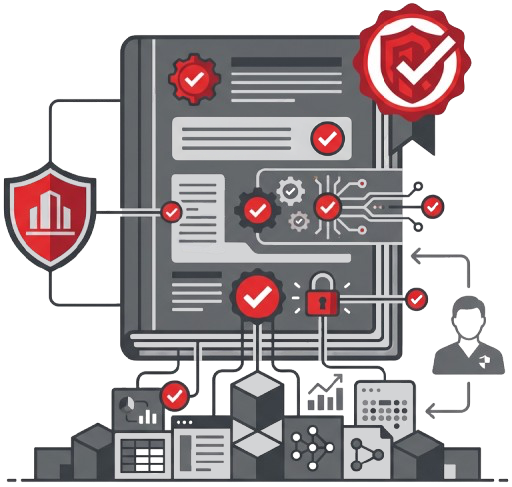
Building Safety Case Support
Structured development, review and regulator-ready alignment of Building Safety Case Reports.
Risk Warden provides Building Safety Case Support for organisations responsible for Higher-Risk Buildings under the Building Safety Act 2022, including preparation for Building Safety Regulator (BSR) scrutiny and Building Assessment Certificate call-up.
What Is a Building Safety Case?
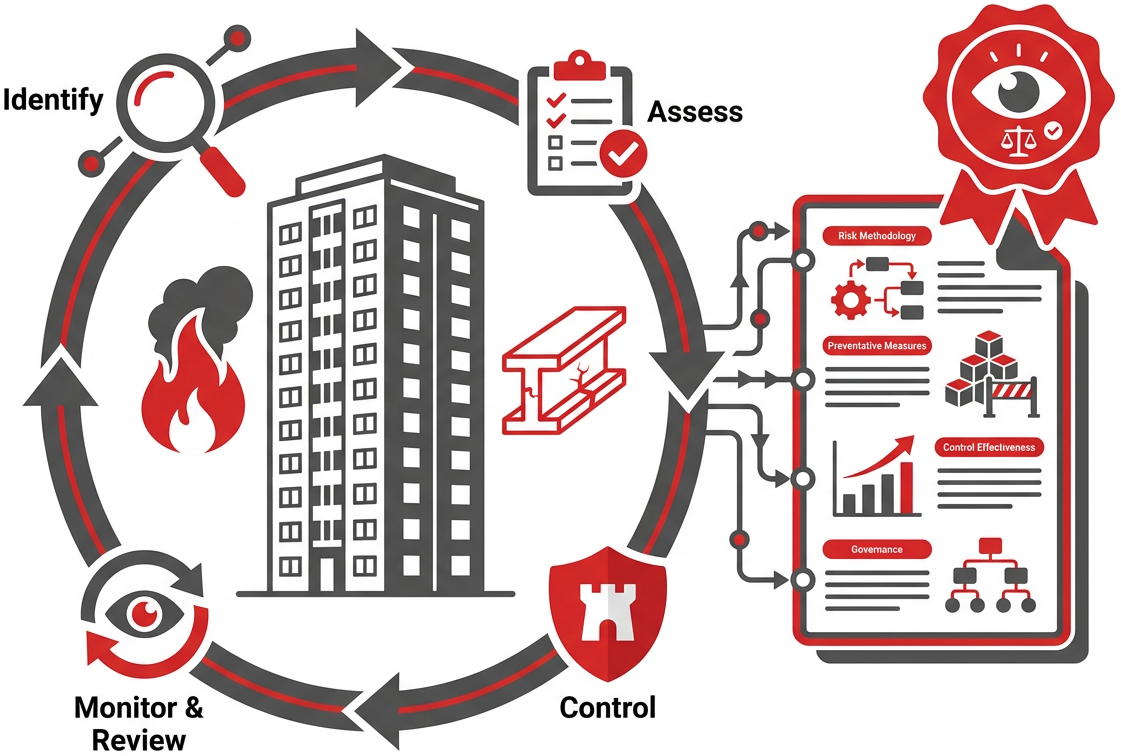
For occupied Higher-Risk Buildings, the principal building safety risks are:
- Spread of fire and smoke
- Structural failure
A Building Safety Case demonstrates how those risks are:
- Identified
- Assessed
- Controlled
- Monitored and reviewed
It forms part of the occupied building regime and must be capable of standing up to independent regulator scrutiny.
The Safety Case must clearly articulate:
- Structured risk identification methodology
- Preventative and protective measures
- Control effectiveness
- Governance and oversight arrangements
- Evidence supporting risk management decisions
It is not a generic report, it must reflect the building’s actual condition, risk profile and live compliance controls.
When Is Building Safety Case Support Required?
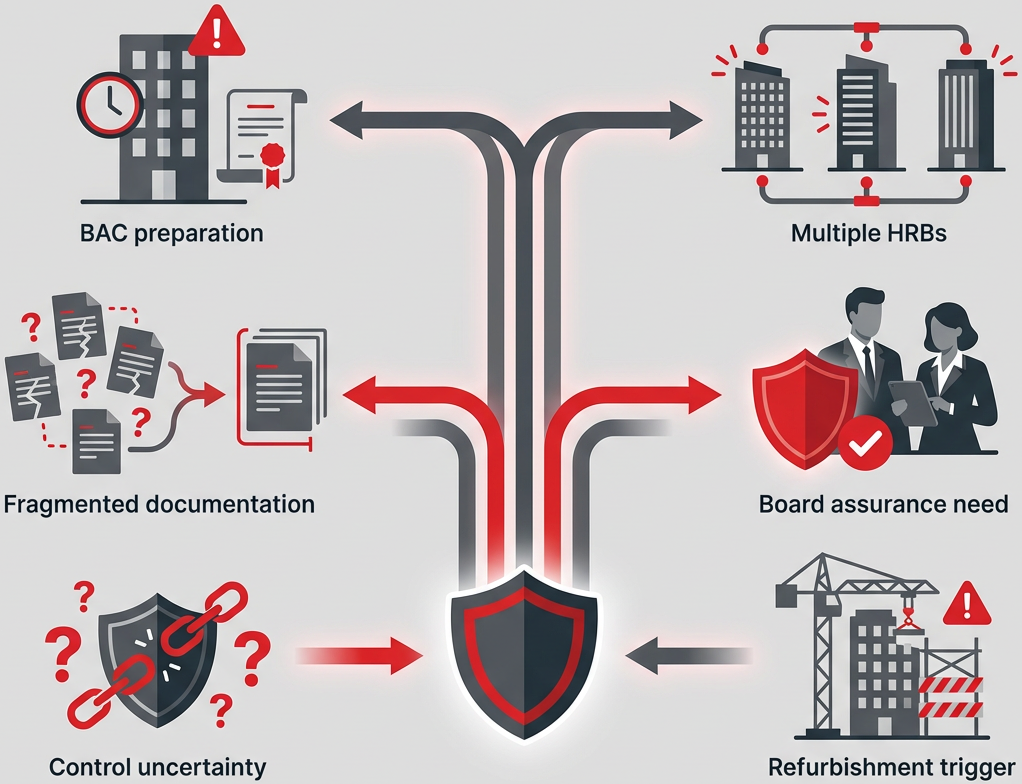
For Accountable Persons and senior leadership teams, a defensible Safety Case is both a statutory requirement and a governance safeguard. Support is typically required where:
- A Higher-Risk Building is preparing for potential Building Assessment Certificate (BAC) call-up
- Existing documentation is fragmented or inconsistent
- There is uncertainty around control effectiveness evidence
- Governance arrangements are unclear or undocumented
- Portfolios contain multiple HRBs requiring structured alignment
- Senior leadership requires defensible board-level assurance
- Following significant refurbishment, structural works or material building alterations
Our Structured Safety Case Support Model
Our advisory approach aligns with our governed mobilisation and quality assurance framework and national capability model.
Safety Case Readiness Review
Our structured advisory support addresses the following key areas to ensure regulatory readiness and defensible governance:
- Review of existing Safety Case documentation (if present)
- Gap analysis against occupied building regime expectations
- Assessment of clarity, proportionality and evidence sufficiency
- Identification of structural or narrative weaknesses
Structured Safety Case Development
Where a Safety Case requires development or substantial restructuring, we support:
- Risk methodology articulation
- Clear definition of principal building safety risks
- Control measure explanation
- Evidence mapping and cross-referencing
- Governance and escalation documentation
- Proportionate narrative aligned to building complexity
- Clear articulation of residual risk and risk tolerance justification
The objective is clarity and defensibility — not volume.
Evidence Mapping & Golden Thread Alignment
Safety Cases must sit within a structured information framework.
We support alignment of:
- Fire Risk Assessments
- Intrusive investigations (Type 2 / Type 4)
- Compartmentation surveys
- Fire Design Strategy documentation
- Remediation records
- Incident and Mandatory Occurrence Reporting (MOR) data
- Maintenance and inspection evidence
This ensures the Safety Case is evidence-backed and regulator-ready.
Building Assessment Certificate (BAC) Preparation
Where call-up is anticipated or underway, we assist with:
- Structured review of Safety Case robustness
- Evidence validation and closure of identified gaps
- Preparation for regulator scrutiny
- Senior-level briefing and assurance support
Our role is to ensure controlled, confident engagement, not reactive document collation.
Fire-Led, Risk-Proportionate Approach
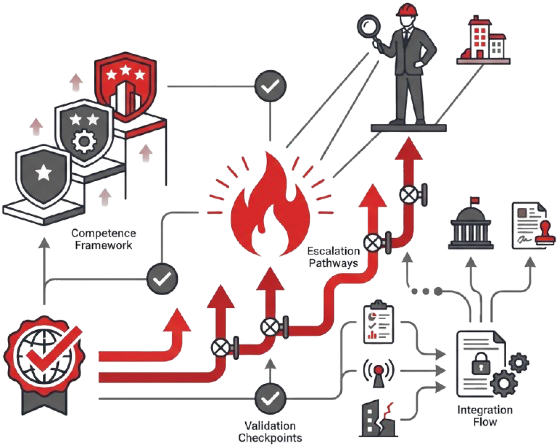
Our Safety Case support reflects modern regulatory expectations:
- Fire-led technical governance
- Defined competence frameworks
- Senior Technical Lead oversight for higher-risk buildings
- Escalation protocols for structural or systemic risk
- ISO 9001-aligned quality governance
Where intrusive findings materially affect risk position, these are integrated into the Safety Case narrative and governance structure.
Designed for Higher-Risk & Complex Buildings
This service is particularly suited to:
- Residential Higher-Risk Buildings (18m+ or 7+ storeys, 2+ residential units)
- Complex mixed-use developments
- Multi-building portfolios
- Organisations transitioning from legacy compliance models
- Dutyholders preparing for BSR engagement
National capability and mobilisation controls support consistent delivery across multi-region estates.

Why Risk Warden?
Many providers focus solely on producing a Safety Case document.
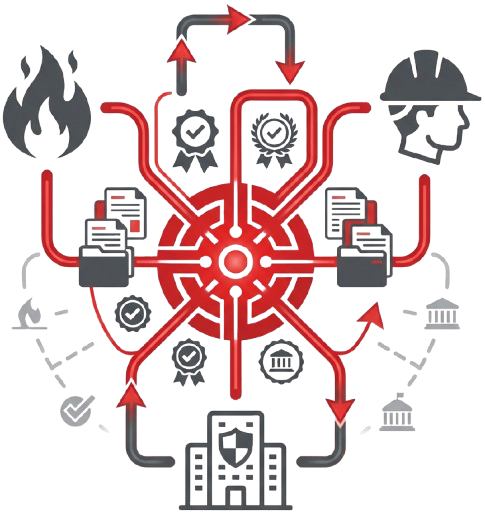
Risk Warden integrates Safety Case development with structured governance oversight and evidence alignment ensuring documentation reflects live control rather than retrospective collation.
Risk Warden delivers:
- Structured governance integration
- Evidence alignment across assessments and investigations
- Proportionate, defensible narrative development
- Regulator-ready preparation
- Alignment between advisory oversight and compliance infrastructure
Safety Case documentation is embedded within a defined governance framework not treated as a standalone consultancy output.
Develop a Regulator-Ready Safety Case
A Building Safety Case must demonstrate more than intent, it must demonstrate control.
Risk Warden provides structured, evidence-based Safety Case support designed to strengthen regulatory confidence and accountable governance.
Frequently Asked Questions
Building Safety Case Support
No. Safety Cases are primarily required for Higher-Risk Buildings under the Building Safety Act. However, similar structured assurance approaches may support governance in complex non-HRB buildings where appropriate.
The Accountable Person (or Principal Accountable Person) retains legal responsibility. Risk Warden provides advisory support, but statutory accountability remains with the dutyholder.
The Building Safety Regulator will expect to see:
- Clear identification of principal building safety risks
- Evidence of proportionate control measures
- Demonstrable governance and oversight
- Evidence-backed narrative linking risk and control
- Mechanisms for continuous review and improvement
No. Fire Risk Assessments form part of the evidence base informing the Safety Case. The Safety Case provides overarching governance assurance.
Timelines depend on building complexity, existing documentation maturity and governance readiness. Structured readiness reviews may take several weeks, while full Safety Case development for complex buildings may require phased delivery.
Yes. We provide structured review and strengthening of existing Safety Case Reports, identifying gaps in evidence, governance clarity and risk articulation.

Most providers offer either software or assessments. We deliver both — under one governed framework. This removes fragmentation, duplication and compliance blind spots.
Unlike traditional software vendors or isolated consultants, Risk Warden operates as a single, accountable compliance partner.
Useful Links
© Copyright 2025 Risk Warden Limited