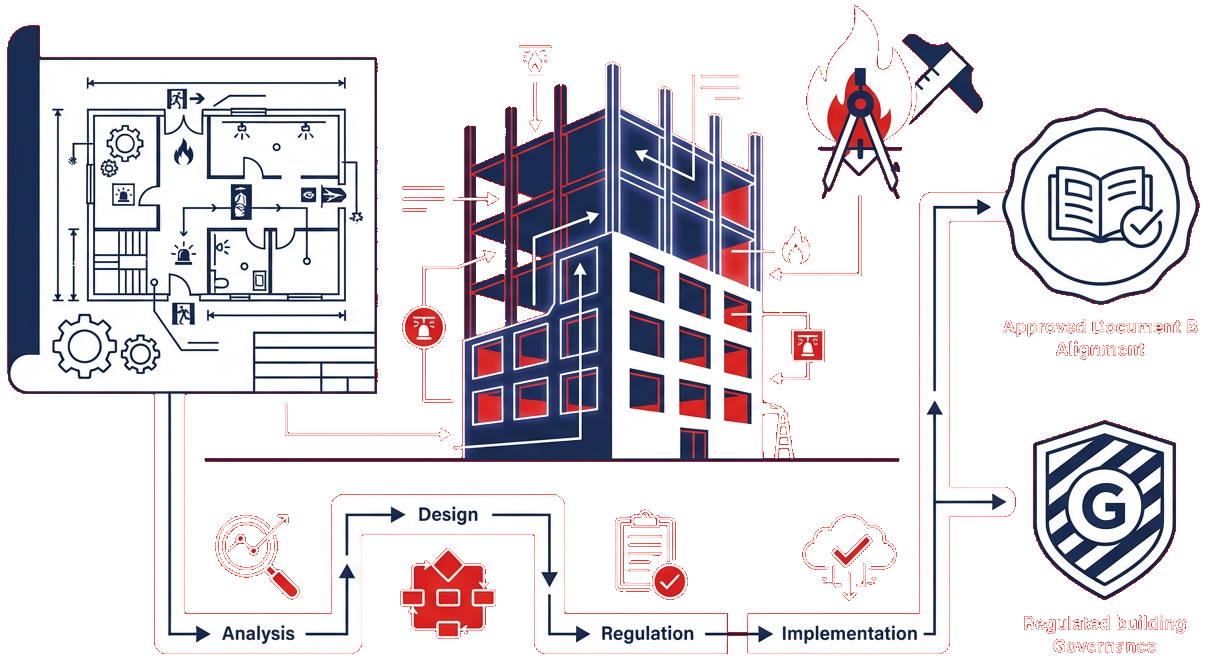
Fire Design Strategy
Structured fire safety design strategy aligned to Building Regulations and regulated building governance.
Request a Fire Design StrategyWhat Is a Fire Design Strategy?
A Fire Design Strategy defines the principles, assumptions and safety rationale that underpin a building’s fire safety design. It sets out how life safety objectives are achieved through fire safety systems, compartmentation, means of escape and operational management.
It supports planning, design review and demonstration of compliance with Building Regulations and associated guidance — particularly for new build, significant refurbishment or complex projects where design decisions materially affect fire safety outcomes.
Structured, Defined Methodology
Risk Warden develops Fire Design Strategies using a structured, regulator-aware methodology that considers:
- Building Regulations requirements and Approved Document B principles
- Project risk profile and complexity
- Life safety objectives
- Means of escape and evacuation principles
- Fire detection, alarm and suppression systems
- Compartmentation and separation philosophy
- Fire-fighting access and strategy assumptions
Where specialist technical input is required, appropriate expertise is incorporated to ensure proportionality, defensibility and alignment with statutory expectations.

When Is a Fire Design Strategy Used?
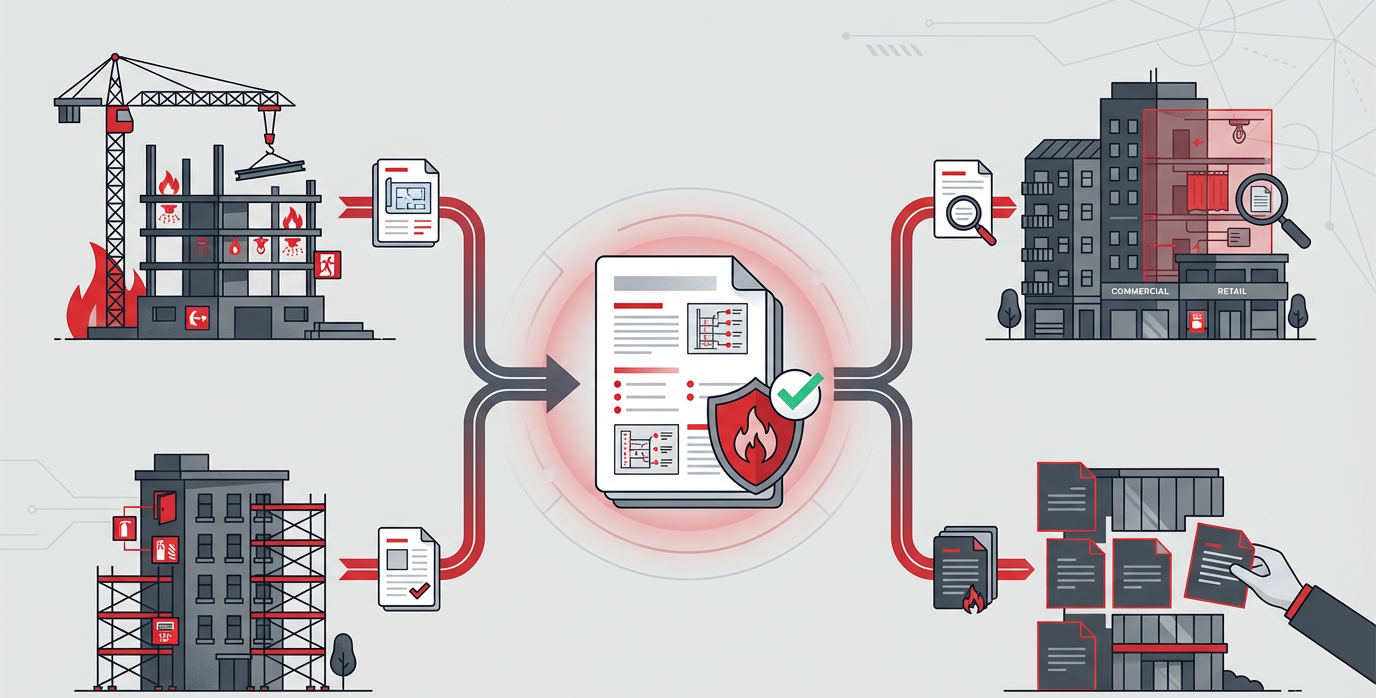
Fire Design Strategies are typically required in these scenarios:
- New build developments to document design intent and regulatory compliance
- Major refurbishment projects to demonstrate continued suitability of fire safety provisions
- Complex existing buildings where clarity of design assumptions is essential
- Retrospective review where design documentation is incomplete or absent
Whether for planned works or governance enhancement, they provide a documented and defensible basis for ongoing fire safety decision-making.
Retrospective Fire Design Strategy
Where original design documentation is missing or incomplete, a retrospective Fire Design Strategy may be developed. This involves:
- Reviewing available drawings and records
- Conducting site verification
- Documenting existing fire safety design features
- Identifying assumptions and unknowns
- Clarifying how life safety objectives are met
Retrospective strategies help bridge evidence gaps, clarify design intent and support ongoing compliance and audit readiness.

Delivered Within the Compliance Operating System
Fire Design Strategies are produced as governed information reports within the Compliance Operating System — not just static files.
Within the platform, strategies can be:
This ensures design intent remains traceable, governed and aligned with broader compliance and building safety governance — including Fire Risk Assessments and Building Safety Case requirements.
Integrated Governance & Evidence Alignment
Fire Design Strategies contribute to wider building safety and compliance processes such as:
- Fire Risk Assessments integration
- Building Safety Cases
- Compartmentation and passive fire protection planning
- Refurbishment change control
- Higher-Risk Building (HRB) compliance planning
- Stakeholder oversight and regulator engagement
When linked to document collections and evidence frameworks, Fire Design Strategies form part of the Golden Thread of building safety information.
Experience, Competence & Delivery Assurance
Fire Design Strategies are delivered through a defined mobilisation and technical review framework aligned with regulated property portfolios.
Our approach includes:
- Competent fire safety expertise and technical input
- Standardised methodology across all sites
- Defined technical and quality assurance review
- Alignment with recognised standards and regulatory expectations
- Governance oversight through the Compliance Operating System
- Capacity to scale nationally while maintaining governance standards
Strategies remain proportionate to project complexity and regulatory scrutiny.
Develop Your Fire Design Strategy
Clear documentation of fire safety design intent is essential for compliance, construction control and ongoing building governance.
Risk Warden delivers Fire Design Strategies designed to support planning, design validation and evidence-based fire safety oversight.
Frequently Asked Questions
Fire Design Strategy
A Fire Design Strategy sets out design principles and assumptions; a Fire Risk Assessment evaluates how effectively those principles have been implemented and identifies existing hazards. They are complementary but distinct.
A Fire Design Strategy is commonly expected where regulatory compliance and design justification must be demonstrated — such as for Building Control submissions — particularly in new or significantly altered buildings. It supports, but does not replace, statutory assessments.
Yes. When original documentation is unavailable or incomplete, a retrospective strategy helps clarify design intent and support governance.
Yes. Fire Design Strategies can inform Building Safety Case development, evidence linkage and Golden Thread documentation within the Compliance Operating System.
It is developed collaboratively with client-supplied project information, technical expertise and where required, specialist fire safety input to ensure proportional justification and regulatory alignment.

Most providers offer either software or assessments. We deliver both — under one governed framework. This removes fragmentation, duplication and compliance blind spots.
Unlike traditional software vendors or isolated consultants, Risk Warden operates as a single, accountable compliance partner.

Useful Links
© Copyright 2025 Risk Warden Limited