
Fire Door Inspections
Structured inspection with asset integration and remediation control.
Competent, evidence-based inspections with contractor-ready reporting and clear audit trails for defensible compliance.
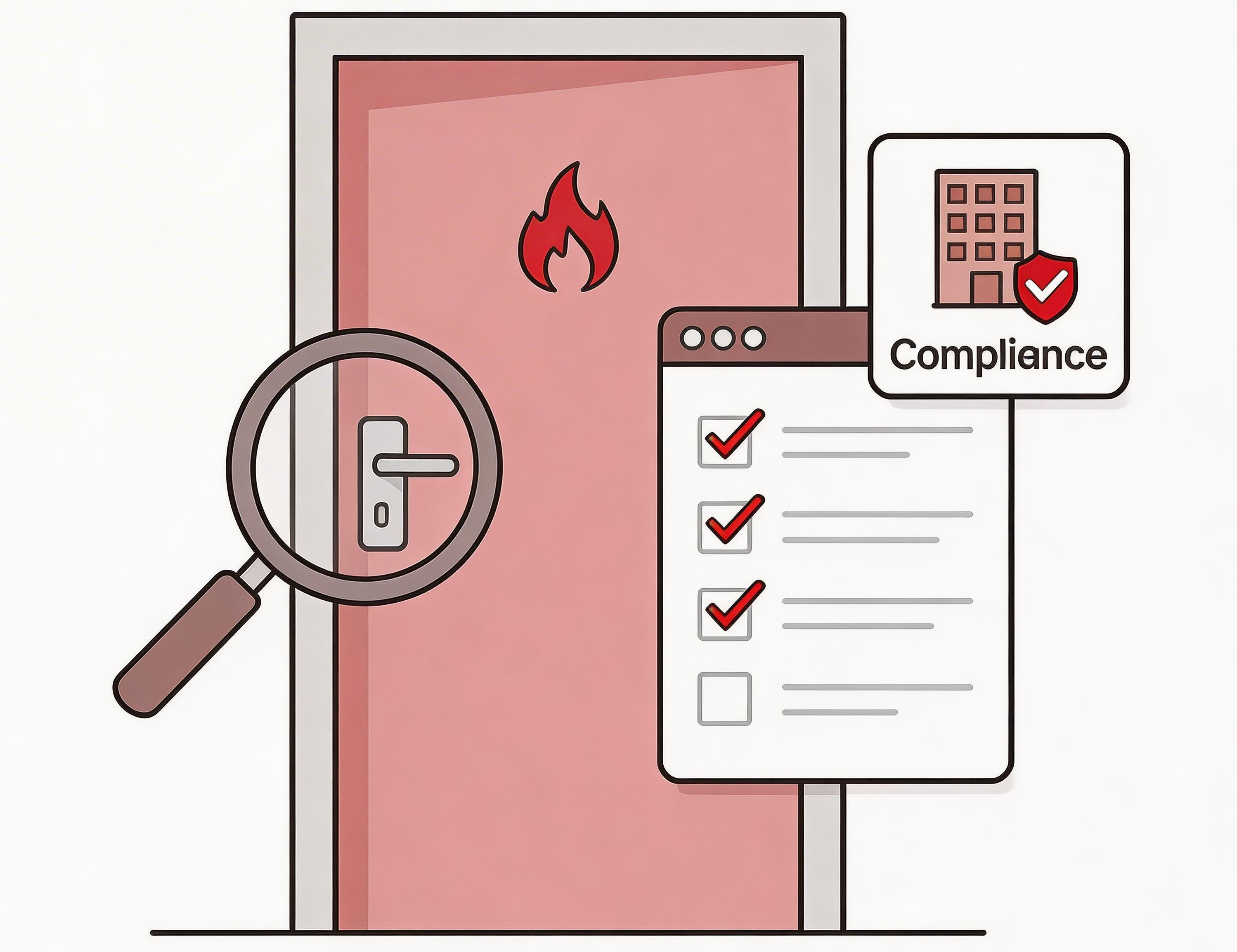
Why Fire Door Inspections Matter
Fire-resisting doors form a critical part of a building’s compartmentation strategy. Regular inspection is expected as part of effective fire safety management and may be subject to scrutiny under the Building Safety Act and wider fire safety legislation.
Failure of door integrity, self-closing mechanisms or signage can compromise containment strategy and evacuation safety. Structured inspection ensures issues are identified, categorised and governed through to remediation.
Structured Survey Methodology
Fire door inspections are conducted by competent inspectors in line with recognised industry guidance and applicable fire door inspection standards.
Each inspection includes:
- Systematic door-by-door review
- Photographic evidence for identified defects
- Categorised findings aligned to compliance expectations
- Clear categorisation and prioritisation of actions
- Clear remedial recommendations
- Digital record retention within the platform
- Consistent reporting standards across properties
- Two-stage technical and quality assurance review
Inspection findings are structured to support controlled remediation and audit-ready evidence.

Flexible Delivery Options
Fire door inspections can be delivered in alignment with operational and governance requirements:
Inspection
Only
For organisations requiring compliance inspection without digital asset integration.
- Structured inspection record
- Categorised findings
- Photographic evidence
- Contractor-ready defect schedule
Inspection with Asset Integration
For organisations managing doors within a structured asset environment.
- Door-level asset record creation or linking
- Inspection responses mapped to asset data fields
- Automatic population of linked asset information
- Ongoing inspection history retention
Inspection with Asset Tagging
For organisations requiring physical-to-digital traceability.
- QR code tagging of doors
- Unique digital identification
- Inspection history linked to tagged asset
- Enhanced long-term traceability
Delivery configuration is aligned to portfolio size, management structure and compliance objectives, ensuring proportional governance without unnecessary complexity.
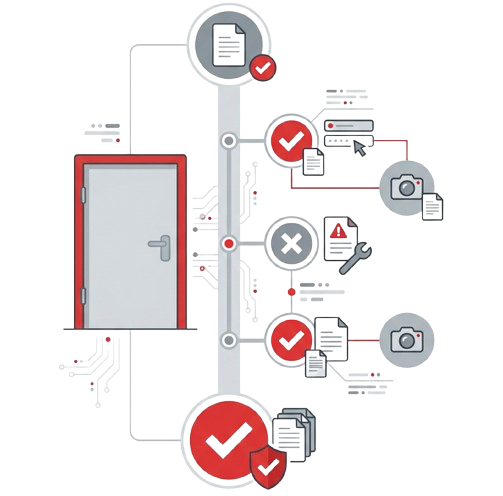
Door Asset History & Compliance Tracking
Where asset integration is enabled, each fire door maintains a structured digital record.
Inspection responses can automatically populate relevant asset data fields, ensuring information remains current without duplication of entry.
Lifecycle tracking supports:
- Continuous inspection history
- Defect categorisation records
- Remedial action tracking
- Evidence of completed works
- Status tracking where pass/fail criteria are defined
- Replacement or removal recording where actions require it
This provides clear, auditable door-level compliance history aligned to inspection integrity and remediation governance.
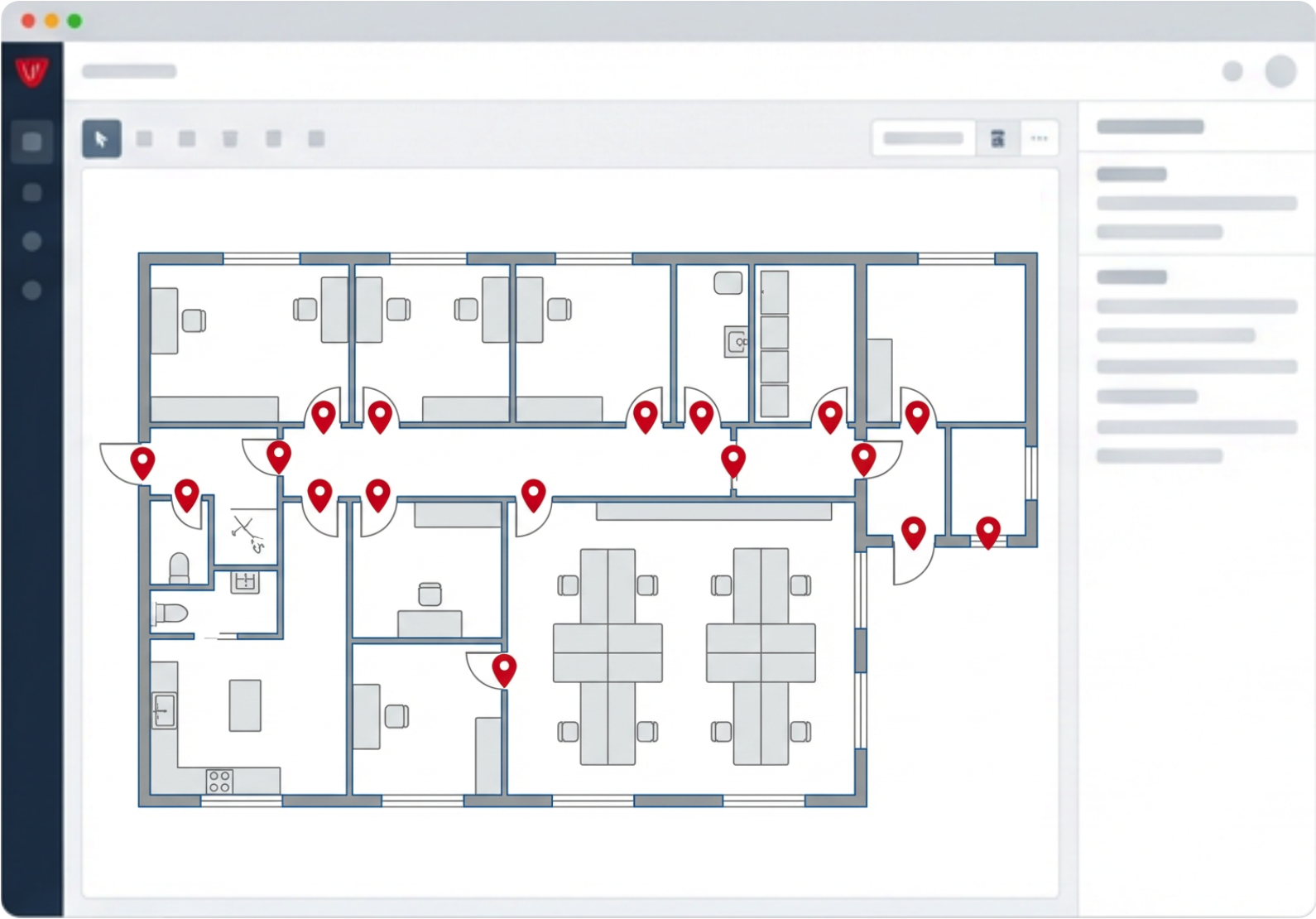
Floor Plan Mapping
Fire door assets can be mapped directly onto digital floor plans, providing clear spatial visibility across buildings.
This enables:
- Rapid identification of door locations
- Improved contractor coordination
- Visual confirmation of inspection coverage
- Simplified remediation planning
Location-based mapping enhances operational clarity, particularly in complex or multi-storey properties.
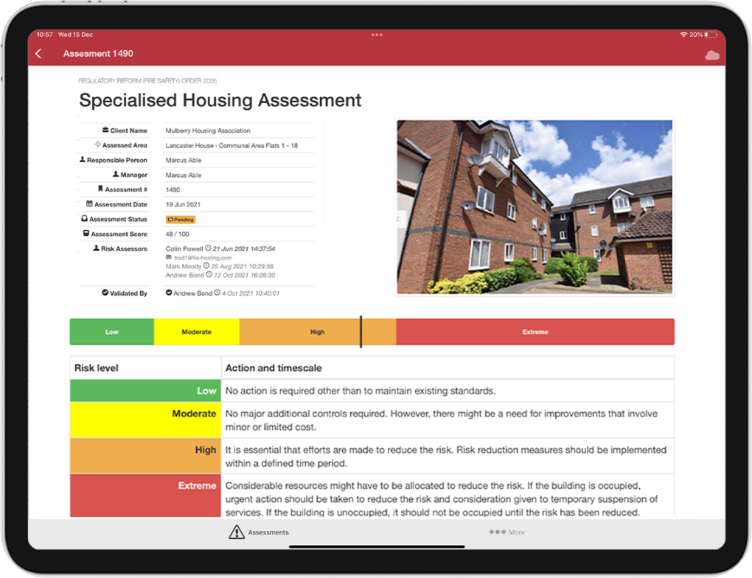
Structured Remediation Included
All fire door inspections include structured remediation governance within the platform.
This enables:
Contractor-Ready Remediation Reporting
Inspection findings can be exported as structured defect schedules suitable for contractor pricing and remedial quotation.
Reports clearly identify:
This reduces ambiguity, accelerates quotation processes and supports controlled remediation planning.
Integration with Wider Fire & Building Safety Strategy
Fire door performance forms part of a building’s overall compartmentation and containment strategy.
Where recurring deficiencies or systemic installation issues are identified, findings may inform wider fire risk assessment review, compartmentation survey or specialist strategy input where appropriate.
This ensures door-level inspection data supports structured compliance oversight across the wider estate.
Experience, Competence & Delivery Assurance
Fire door inspection requires defined competency and consistent methodology.
Risk Warden operates through a structured mobilisation and delivery framework designed for regulated property portfolios.
Our model includes:
- Competent inspectors aligned to recognised guidance
- Defined inspection methodology
- Structured data capture standards
- Independent quality assurance review
- Oversight within the Compliance Operating System
- Capacity to scale nationally while maintaining governance standards
This ensures findings are consistent, defensible and appropriately governed.
Broader Fire & Property Risk Coverage
Risk Warden supports wider fire, health and property risk programmes within the same structured compliance environment.
In addition to Fire Door Inspections, we deliver:
Beyond assessment delivery, Risk Warden supports organisations requiring asset management, contractor evaluation and estate-wide compliance oversight through expanded platform plans.
Where strategic advisory or formal regulatory documentation is required, Building Safety Strategy & Assurance and Consultancy services provide structured governance support.
Book a Fire Door Inspection
Structured inspection. Digital traceability. Controlled remediation.
Fire door inspections are delivered within a structured compliance governance framework.
Frequently Asked Questions
Fire Door Inspections
Inspection frequency depends on building type, occupancy and risk profile. High-traffic or higher-risk buildings may require more frequent inspection, particularly where doors form part of a critical compartmentation strategy.
Inspections should be undertaken by competent individuals with appropriate knowledge of fire door construction, installation and performance requirements.
Physical tagging is not always mandatory but can significantly improve traceability, inspection history tracking and long-term compliance management, particularly in larger or higher-risk properties.
Yes. Where asset integration is enabled, existing door records can be linked within the platform. Inspection responses can automatically populate relevant asset fields to maintain accurate digital records.
No. Fire door inspections focus on compliance assessment and defect categorisation. Where required, findings may inform wider fire risk assessment or strategy review.
The appropriate assessment type depends on building complexity, construction certainty and risk profile.
- Type 1 assessments are non-intrusive.
- Type 2 assessments include targeted intrusive investigation.
- Type 4 assessments involve full intrusive structural verification.
Assessment scope should be proportionate to building risk and regulatory expectations.

Most providers offer either software or assessments. We deliver both — under one governed framework. This removes fragmentation, duplication and compliance blind spots.
Unlike traditional software vendors or isolated consultants, Risk Warden operates as a single, accountable compliance partner.

Useful Links
© Copyright 2025 Risk Warden Limited