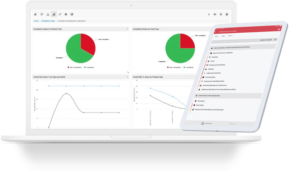
How are risks prioritised?
Identified hazards are assessed using a structured likelihood and consequence framework. Remedial actions are prioritised and governed through structured remediation tracking to ensure proportionate risk reduction.
How often should a Health & Safety Risk Assessment be reviewed?
Assessments should be reviewed periodically and whenever there are significant changes to the premises, activities or risk profile.
What hazards are covered in a Health & Safety Risk Assessment?
Health & Safety Risk Assessments consider building-related and operational hazards, including access risks, equipment safety, environmental conditions and management controls.
Is a Health & Safety Risk Assessment a legal requirement?
Yes. UK health and safety legislation requires employers and duty holders to identify and assess workplace risks and implement suitable control measures.
Will the survey disrupt building operations?
Scope and intrusiveness are agreed in advance. Surveys are planned to minimise disruption while ensuring appropriate verification of compartment integrity.
Are findings risk scored?
Yes. Identified deficiencies are assessed using a structured likelihood and consequence framework. Remedial actions are assigned priority and risk reduction is defined by the assessor.
Does this replace a Fire Risk Assessment?
No. A Fire Risk Assessment evaluates overall fire risk management. Compartmentation surveys verify the physical integrity of passive fire protection elements. The two are complementary.
When is an intrusive compartmentation survey required?
Intrusive surveys may be required where structural integrity is uncertain, where voids or service penetrations are suspected to compromise fire resistance, or where higher-risk buildings require enhanced verification.
Can this integrate with our maintenance and PPM programmes?
Yes. Findings can inform Planned Preventative Maintenance schedules and contractor oversight, supporting ongoing water hygiene governance rather than one-off reporting.
How are risks prioritised?
Identified hazards are assessed using a structured likelihood and consequence framework. Remedial actions are assigned priority and governed through structured remediation tracking to ensure proportionate risk reduction.